Skip to content
  • Breast Care
  • Blog
  • Our Story
  • FAQ

Need help?

Call us 04 433 5685
shop@otb-uae.com

Follow Us

  • Facebook
  • Instagram
  • LinkedIn
  • Face Mask and other protection
  • Sanitizer Dispenser
  • Adult Orthopedic Shoes
  • Children's Orthopedic Shoes
  • Active Orthopedic Shoes
  • Shoes Accessories
  • All Shoes
  • Bauerfeind Medical Line
  • Bauerfeind Sports Line
  • Neck Braces
  • Compression Socks
  • Shoulder Support
  • Back Support
  • Abdominal Support
  • Knee Support
  • Ankle Support
  • Elbow Support
  • Wrist Support
  • Thumb Brace
  • Foot Braces
  • Knee Braces
  • Breast Forms
  • Mastectomy Bra
  • Baby Diapers
  • Baby Bath and Body Care
  • Baby Wet Wipes
  • Wheelchairs
  • Wheelchair Accessories
  • Electric Wheelchairs
  • Walking Aids, Sticks & Crutches
  • Pushchairs
  • Gait Trainer
  • Tens Muscle Stimulators
  • Shower Commode Chairs
  • Adult Diapers
  • Underpads and Protectors
  • Supporting Briefs and Panties
  • Cleansers, Shampoo and Creams
  • Personal Care
  • Face Mask and other protection
  • Sanitizer Dispenser
  • Orthopedic Shoes
  • Adult Orthopedic Shoes
  • Children's Orthopedic Shoes
  • Active Orthopedic Shoes
  • Shoes Accessories
  • All Shoes
  • Orthopedic Supports
  • Bauerfeind Medical Line
  • Bauerfeind Sports Line
  • Neck Braces
  • Compression Socks
  • Shoulder Support
  • Back Support
  • Abdominal Support
  • Knee Support
  • Ankle Support
  • Elbow Support
  • Wrist Support
  • Thumb Brace
  • Foot Braces
  • Knee Braces
  • Mother Care
  • Breast Forms
  • Mastectomy Bra
  • Baby Care
  • Baby Diapers
  • Baby Bath and Body Care
  • Baby Wet Wipes
  • Mobility Aids
  • Wheelchairs
  • Wheelchair Accessories
  • Electric Wheelchairs
  • Walking Aids, Sticks & Crutches
  • Pushchairs
  • Gait Trainer
  • Homecare Products
  • Tens Muscle Stimulators
  • Shower Commode Chairs
  • Incontinence Care
  • Adult Diapers
  • Underpads and Protectors
  • Supporting Briefs and Panties
  • Cleansers, Shampoo and Creams
OTBUAE OTBUAE
Login / Signup
My account
0
Cart

Your cart is empty

Shop our products
  • Shop by Category
    Personal Care
    • Face Mask and other protection
    • Sanitizer Dispenser
    Orthopedic Shoes
    • Adult Orthopedic Shoes
    • Children's Orthopedic Shoes
    • Active Orthopedic Shoes
    • Shoes Accessories
    • All Shoes
    Orthopedic Supports
    • Bauerfeind Medical Line
    • Bauerfeind Sports Line
    • Neck Braces
    • Compression Socks
    • Shoulder Support
    • Back Support
    • Abdominal Support
    • Knee Support
    • Ankle Support
    • Elbow Support
    • Wrist Support
    • Thumb Brace
    • Foot Braces
    • Knee Braces
    Mother Care
    • Breast Forms
    • Mastectomy Bra
    Baby Care
    • Baby Diapers
    • Baby Bath and Body Care
    • Baby Wet Wipes
    Mobility Aids
    • Wheelchairs
    • Wheelchair Accessories
    • Electric Wheelchairs
    • Walking Aids, Sticks & Crutches
    • Pushchairs
    • Gait Trainer
    Homecare Products
    • Tens Muscle Stimulators
    • Shower Commode Chairs
    Incontinence Care
    • Adult Diapers
    • Underpads and Protectors
    • Supporting Briefs and Panties
    • Cleansers, Shampoo and Creams
  • Breast Care
  • Blog
  • Our Story
  • FAQ

Get 10% OFF

Subscribe to our newsletter today and receive an exclusive 10% OFF

Use this bar to show information about your cookie policy.

Access Denied
IMPORTANT! If you’re a store owner, please make sure you have Customer accounts enabled in your Store Admin, as you have customer based locks set up with EasyLockdown app. Enable Customer Accounts

Broken Ankle

Ankle InjuriesDP PRAKASHNov 23, 2025
Broken Ankle
Share
0 comments

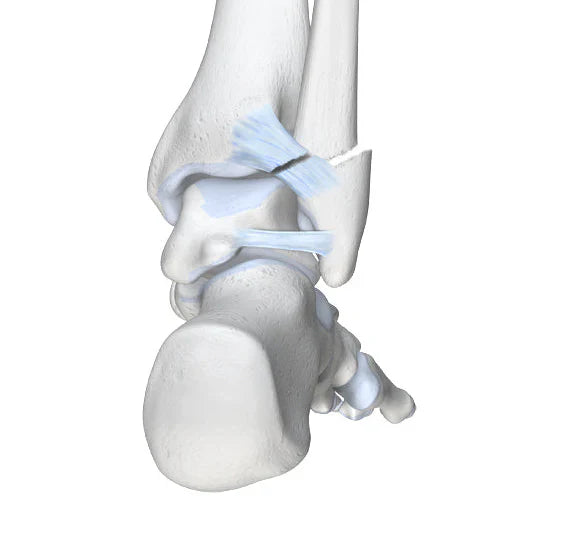
Whether it’s a bad landing in basketball, rolling on a loose rock while hiking or tripping on the curb trying the get into the Uber, all it takes is a quick wrong movement to roll and break your ankle. When it comes to fractures and breaks in the lower half of the body, ankles are the most commonly affected area in adults, so it’s important to know how to best manage them.

If you do break your ankle, it can become increasingly unstable, and if left untreated, can take months or even years for normal movement and stability to occur.

Heavily Loaded Joint With Every Step

Your ankle joint is one of nature’s masterpieces, absorbing force and shock the equivalent of up to 8 times your body weight. What you might not know though, is that the ankle has two main joints, the upper and lower ankle joints.

The lower ankle joint is where the base of your heel meets the rest of your foot, while the upper ankle joint is where your leg and foot joint at the base of the leg itself.

In between these two joints is the malleolus fork, which protrudes on either side of your ankle with what most people know as the ankle bones.

All these bone structures are bound together and guided by a complex network of ligaments, and when there’s an ankle fracture, these ligaments are also often injured.

The Most Common Fracture Of The Lower Extremities: The Ankle Fracture

If the ankle is so strong and dynamic, why does it break in the first place? Because your ankle is designed to guide your foot in normal walking and running movements, especially the lower ankle, the upper joint becomes more sensitive to tilting and twisting movements. Because of this, it’s most often a wrong landing or twisted landing/stride that causes an upper joint fracture. Such a fracture of the ankle joint is called a malleolar fracture , whereby this term is usually equated with a fibula fracture.

Fractures In The Ankle Area

Because the ankle itself is very complex, the range of possible fractures also varies widely. They are however summed up into three main types of fracture.

Talus fracture: fracture of the ankle bone (very rare)
Tibial fracture: broken tibia
Fibular fracture: broken fibula (very common)

These fractures can also occur in combination, leading to more complex and painful fractures that require more specific care. These complex fractures almost always lead to ligament injury as well.

Acute Treatment And Rehab When The Ankle Is Broken

Over the long-term, it’s not the fracture itself that causes issues, but damage to the cartilage and ligaments. This damage is dependent on how severe the initial fracture is, and the angle and force of the trauma. What is often more important however, is how the break is corrected and healed. If the position of the bones is not 100 percent correct, the joint will often develop significant signs of wear and tear and chronic instability within just one year of the fracture healing. The surgical intervention and the targeted reconstruction of the stabilising muscles are therefore of enormous importance.

Slowly Rebuild After An Ankle Fracture

If the ankle is broken, the joint shouldn’t bear any weight or strain for at least 6 weeks so the fracture can heal. As a result, the stabilising muscles weaken and are much less effective when it comes to rehab. Proper movement and exercise with a therapist in these 6 weeks is crucial to the long term recovery of the cartilage and ligaments. Using supports and ankle braces in the rehab and recovery period is the best practice for long-term health of the joint.

Supports And Orthoses Provide Stability And Stimulation

A brace provides support after the initial 6 week rest period.It ensures that the ankle joint receives the necessary stability after a fracture and is not overloaded. These products are designed and shaped so that they can be worn comfortably day to day, in most footwear including joggers, sports shoes and business shoes. Thanks to the ankle support, the foot can follow its natural rolling process and at the same time stay protected from re-injury.

In the further course of rehab, active supports are increasingly used for muscular stabilisation. These special supports from Bauerfeind are made of breathable knitted fabric that fits tightly yet comfortably around the ankle. The support also applies pressure when moving and massages the ankle to relieve pain and swelling.

Wearing an ankle support is also recommended after the rehabilitation phase - and not only if there are residual symptoms. The stabilising effect reduces the risk of recurring injuries and/or overloading during exercise. Both can lead to chronic instability in the long term, so wearing the right support makes all the difference.

Tags: Ankle injuries, Ankle support
Share
Previous articleNext article

Leave a comment

All comments are moderated before being published

Join Us

A short sentence describing what someone will receive by subscribing

100% free, Unsubscribe any time!

Follow us

Invalid password
Enter

Bauerfeind Middle East FZ LLC - Dubai Healthcare City, Building 40, P.O.Box 505116 Dubai, U.A.E Tel. +971 4 568 3730 / +971 4 433 5685 shop@bauerfeind.ae

OTB Head Office – Dubai Healthcare City, Building 40, Office 510 Dubai, U.A.E. P.O.Box 505116
Tel. +971 4 568 3730 /+971 4 433 5684
info@otb-uae.com

More about OTB

  • About us
  • Shipping information
  • Terms of service
  • Privacy Policy
  • Return Policy
  • Refund policy
  • Terms of Service
  • Quality Policy
  • Careers

GET 10% OFF TODAY

10% discount on your first purchase for signing up, plus get on-going discounts and latest news.

Country/region
Country/region

© 2026 OTBUAE

Follow Us

We Accept

American Express Apple Pay Cartes Bancaires Google Pay JCB Mastercard Union Pay Visa

© 2026 OTBUAE

  • Opens in a new window.