
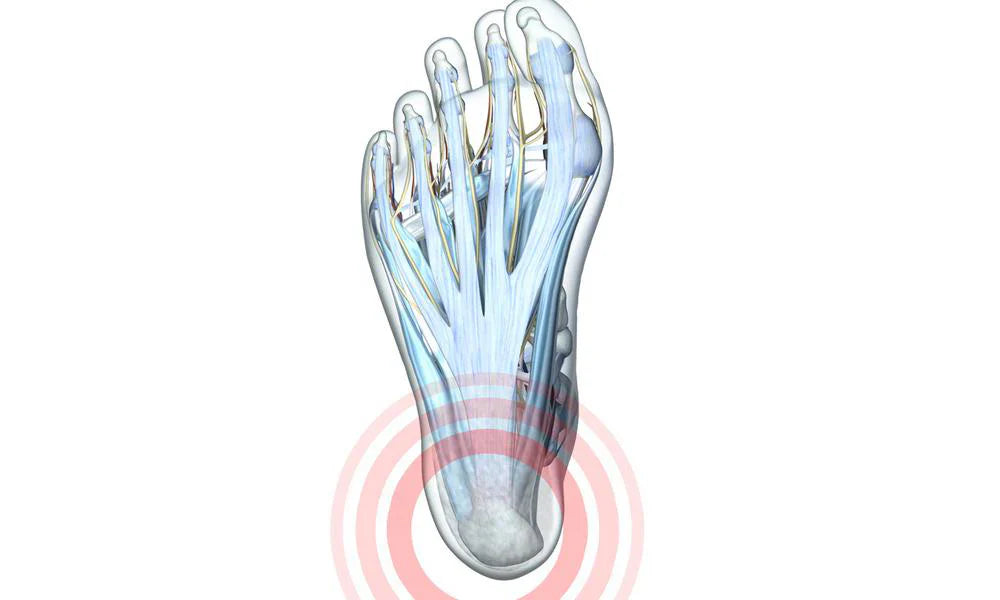
What Is Heel Pain?

The feet support the body’s weight and facilitates movement. The heel bone (Calcaneus) is the posterior part of our foot and performs crucial functions in our everyday life. This bone is optimized to evenly distribute our bodyweight over uneven surfaces.
Excessive stress on the heel (such as running on hard surfaces) can lead to long term degeneration of the bone. In mild cases, a patient will experience pain in the morning after a long night’s sleep. The pain subsides eventually, and the symptoms disappear.
However, the underlying condition progresses and in chronic cases, this can lead to severely restricted mobility. In some cases, the patient may develop bone growths on the surface of the heel bone, called heel spurs. Early diagnosis is the best approach to this, and initial symptoms should not be neglected.
Causes Of Pain In The Heel
Pain in the heel is a direct result of overloading the feet. This comes from excessive stress on the foot, in particular the ankle, which over time can lead to degeneration of the heel bone. The more common causes of this overloading include:
Intense Physical Activity
Occupations or sports that put excessive pressure on the feet where the person is standing constantly increase the risk. People working in the hospitality and retail industry are particularly vulnerable.
Rigorous Sporting Activities And Training
Athletes who engage in high-intensity sports like rugby and football are more likely to cause repeated stress to the ankle.
Hereditary And Pre-Existing Conditions
- Certain genetic predispositions can increase the risk of pain in the heel. Rheumatic, Circulatory and inflammatory diseases in particular lead to higher risk.
- Other conditions affecting the heel like Heel spurs, can cause pain in the heel. Bone growths on the heel bone’s surface alter the structure of the bone and can significantly impact a patient’s mobility and quality of life.
- Being obese/overweight places an excess burden on the feet and in the long term can lead to degeneration of the heel as well as other parts of the foot.
Heel Pain Symptoms
Long term wear and tear of the foot due to constant overload under excess stress leads to inflammation of the heel bone. A patient develops pain in the heel which gets worse with time. Some of the commonly known symptoms along that progression include:
- Slight pain is common in the morning or after long periods of inactivity. This is known as “start-up” pain. The symptoms tend to go away during the day.
- Pain in the heel is degenerative. As the disease progresses the symptoms tend to get amplified, and a patient’s pain will become more pronounced and persist through the day.
- The skin surrounding the affected area begins to feel sore and becomes red. This can lead to inflammation in the lower leg as well.
- In the long term, the patient’s foot will begin to feel stiff and their mobility is severely restricted. There is a sharp pain in the heel even without the application of stress.
- In chronic cases, there might be a risk of calcium build up on the heel bone leading to bone growths that cause heel spurs.
Diagnosis Of Pain In The Heel

Podiatrist or orthopaedic doctor is the best person to seek advice from when experiencing pain in the heel.
A thorough physical and patient history helps them to understand the risk factors on an individual basis.
A thorough physical and patient history helps them to understand the risk factors on an individual basis.
This imaging combined with a doctor’s analysis can lead to an accurate diagnosis.
Heel Pain Treatment
Treatment for heel pain is centred around alleviating the symptoms and taking measures to prevent worsening of the condition. A useful guide that has been proven effective is:
Relieve The Foot - Pain Relief For Heel Pain
- It is crucial to relieve the foot from the excess stress it is under. Use of comfortable and well-padded shoes every day helps to provide ample support and prevent undue stress on the foot.
- Sturdy footwear can also help to practice healthy proprioception which has long term benefits.
- Weight and obesity are risk factors that can be addressed in a patient’s day to day life. A healthier low carb diet alongside regular exercise can help the patient to lose weight.
- Reducing the strain on the feet like this goes a long way to relieving heel pain.
Prescribed Medication
- When there is significant inflammation in the feet, patients find it very beneficial to use prescribed anti-inflammatory and analgesics. Mild cases are often managed conservatively with such treatment.
- In advanced patients with chronic symptoms, cortisone injections have proven to be effective. These measures allow patients to alleviate pain and go about their daily lives.
- However there are risks associated with the regular use of Cortisone injections including infections, and the procedure is not particularly comfortable and may not be worth the discomfort.
Physiotherapy Exercises

It is highly recommended to regularly exercise the muscles in the calf and foot to build strength. Developing these muscles can help reduce the stress on the bone as well as combat the progression of the condition. Multiple exercises a day for a few months can rapidly improve a patient’s symptoms.
Practising healthy proprioception and prioritising a good warm-up before any training can go a long way in recovery.
Medical Shoe Inserts

Optimally shaped medical shoe insoles are very effective as both a preventative measure and to slow the degeneration of the Calcaneus (heel bone).
The insoles help protect the foot from excess stress as well as any unnatural movements beyond the natural range of motion, i.e. against overloading and overstretching.
The insoles can also serve as a comfortable cushion for patients with inherent malformations in the structure of the foot.
Surgical Intervention
- Only in rare cases of heel spurs does surgery become necessary. Most cases of the condition are managed conservatively with insoles and physiotherapy.
- Some patients might require surgery to correct the excess bone growth to restore structure and mobility to the foot.
- Surgery may appear to be an attractive solution to the pain in the heel, however, it is a risky procedure and is usually the last resort to provide relief to a patient.
Best Insoles For Heel Pain
Medical grade shoe inserts like Bauerfeind’s ViscoSpot heel cushion and the ErgoPad Redux Heel 2 insole are designed to alleviate the symptoms of pain in the heel and have been shown to be incredibly effective in this capacity. The insert is designed specifically to adapt to a patient’s foot shape and provide a custom fit.
How Does The ViscoSpot Heel Cushion Help Heel Pain?
The ViscoSpot has three different densities in its construction.
- The inner heel cushion takes the pressure off the heel and acts as a shock absorber.
- It is surrounded by a firmer pad that helps to relieve the tendon on the sole of the foot.
- The outer edge is made of a stronger material to support the foot during movement and provide stability.
- Anatomically shaped to your heel, it cushions each step and gently redistributes the pressure, allowing for regular walking by alleviating the symptoms.
The ViscoSpot also works well as a preventative of heel pain and is very suitable for people who have high amounts of pressure on their heels over the day.
What Is Heel Pain?
The feet support the body’s weight and facilitates movement. The heel bone (Calcaneus) is the posterior part of our foot and performs crucial functions in our everyday life. This bone is optimized to evenly distribute our bodyweight over uneven surfaces.
Excessive stress on the heel (such as running on hard surfaces) can lead to long term degeneration of the bone. In mild cases, a patient will experience pain in the morning after a long night’s sleep. The pain subsides eventually, and the symptoms disappear.
However, the underlying condition progresses and in chronic cases, this can lead to severely restricted mobility. In some cases, the patient may develop bone growths on the surface of the heel bone, called heel spurs. Early diagnosis is the best approach to this, and initial symptoms should not be neglected.
Causes Of Pain In The Heel
Pain in the heel is a direct result of overloading the feet. This comes from excessive stress on the foot, in particular the ankle, which over time can lead to degeneration of the heel bone. The more common causes of this overloading include:
Intense Physical Activity
Occupations or sports that put excessive pressure on the feet where the person is standing constantly increase the risk. People working in the hospitality and retail industry are particularly vulnerable.
Rigorous Sporting Activities And Training
Athletes who engage in high-intensity sports like rugby and football are more likely to cause repeated stress to the ankle.
Hereditary And Pre-Existing Conditions
- Certain genetic predispositions can increase the risk of pain in the heel. Rheumatic, Circulatory and inflammatory diseases in particular lead to higher risk.
- Other conditions affecting the heel like Heel spurs, can cause pain in the heel. Bone growths on the heel bone’s surface alter the structure of the bone and can significantly impact a patient’s mobility and quality of life.
- Being obese/overweight places an excess burden on the feet and in the long term can lead to degeneration of the heel as well as other parts of the foot.
Heel Pain Symptoms
Long term wear and tear of the foot due to constant overload under excess stress leads to inflammation of the heel bone. A patient develops pain in the heel which gets worse with time. Some of the commonly known symptoms along that progression include:
- Slight pain is common in the morning or after long periods of inactivity. This is known as “start-up” pain. The symptoms tend to go away during the day.
- Pain in the heel is degenerative. As the disease progresses the symptoms tend to get amplified, and a patient’s pain will become more pronounced and persist through the day.
- The skin surrounding the affected area begins to feel sore and becomes red. This can lead to inflammation in the lower leg as well.
- In the long term, the patient’s foot will begin to feel stiff and their mobility is severely restricted. There is a sharp pain in the heel even without the application of stress.
- In chronic cases, there might be a risk of calcium build up on the heel bone leading to bone growths that cause heel spurs.
Diagnosis Of Pain In The Heel
Podiatrist or orthopaedic doctor is the best person to seek advice from when experiencing pain in the heel.
A thorough physical and patient history helps them to understand the risk factors on an individual basis.
A thorough physical and patient history helps them to understand the risk factors on an individual basis.
This imaging combined with a doctor’s analysis can lead to an accurate diagnosis.
Heel Pain Treatment
Treatment for heel pain is centred around alleviating the symptoms and taking measures to prevent worsening of the condition. A useful guide that has been proven effective is:
Relieve The Foot - Pain Relief For Heel Pain
- It is crucial to relieve the foot from the excess stress it is under. Use of comfortable and well-padded shoes every day helps to provide ample support and prevent undue stress on the foot.
- Sturdy footwear can also help to practice healthy proprioception which has long term benefits.
- Weight and obesity are risk factors that can be addressed in a patient’s day to day life. A healthier low carb diet alongside regular exercise can help the patient to lose weight.
- Reducing the strain on the feet like this goes a long way to relieving heel pain.
Prescribed Medication
- When there is significant inflammation in the feet, patients find it very beneficial to use prescribed anti-inflammatory and analgesics. Mild cases are often managed conservatively with such treatment.
- In advanced patients with chronic symptoms, cortisone injections have proven to be effective. These measures allow patients to alleviate pain and go about their daily lives.
- However there are risks associated with the regular use of Cortisone injections including infections, and the procedure is not particularly comfortable and may not be worth the discomfort.
Physiotherapy Exercises
It is highly recommended to regularly exercise the muscles in the calf and foot to build strength. Developing these muscles can help reduce the stress on the bone as well as combat the progression of the condition. Multiple exercises a day for a few months can rapidly improve a patient’s symptoms.
Practising healthy proprioception and prioritising a good warm-up before any training can go a long way in recovery.
Medical Shoe Inserts
Optimally shaped medical shoe insoles are very effective as both a preventative measure and to slow the degeneration of the Calcaneus (heel bone).
The insoles help protect the foot from excess stress as well as any unnatural movements beyond the natural range of motion, i.e. against overloading and overstretching.
The insoles can also serve as a comfortable cushion for patients with inherent malformations in the structure of the foot.
Surgical Intervention
- Only in rare cases of heel spurs does surgery become necessary. Most cases of the condition are managed conservatively with insoles and physiotherapy.
- Some patients might require surgery to correct the excess bone growth to restore structure and mobility to the foot.
- Surgery may appear to be an attractive solution to the pain in the heel, however, it is a risky procedure and is usually the last resort to provide relief to a patient.
Best Insoles For Heel Pain
Medical grade shoe inserts like Bauerfeind’s ViscoSpot heel cushion and the ErgoPad Redux Heel 2 insole are designed to alleviate the symptoms of pain in the heel and have been shown to be incredibly effective in this capacity. The insert is designed specifically to adapt to a patient’s foot shape and provide a custom fit.
How Does The ViscoSpot Heel Cushion Help Heel Pain?
The ViscoSpot has three different densities in its construction.
- The inner heel cushion takes the pressure off the heel and acts as a shock absorber.
- It is surrounded by a firmer pad that helps to relieve the tendon on the sole of the foot.
- The outer edge is made of a stronger material to support the foot during movement and provide stability.
- Anatomically shaped to your heel, it cushions each step and gently redistributes the pressure, allowing for regular walking by alleviating the symptoms.
The ViscoSpot also works well as a preventative of heel pain and is very suitable for people who have high amounts of pressure on their heels over the day.