
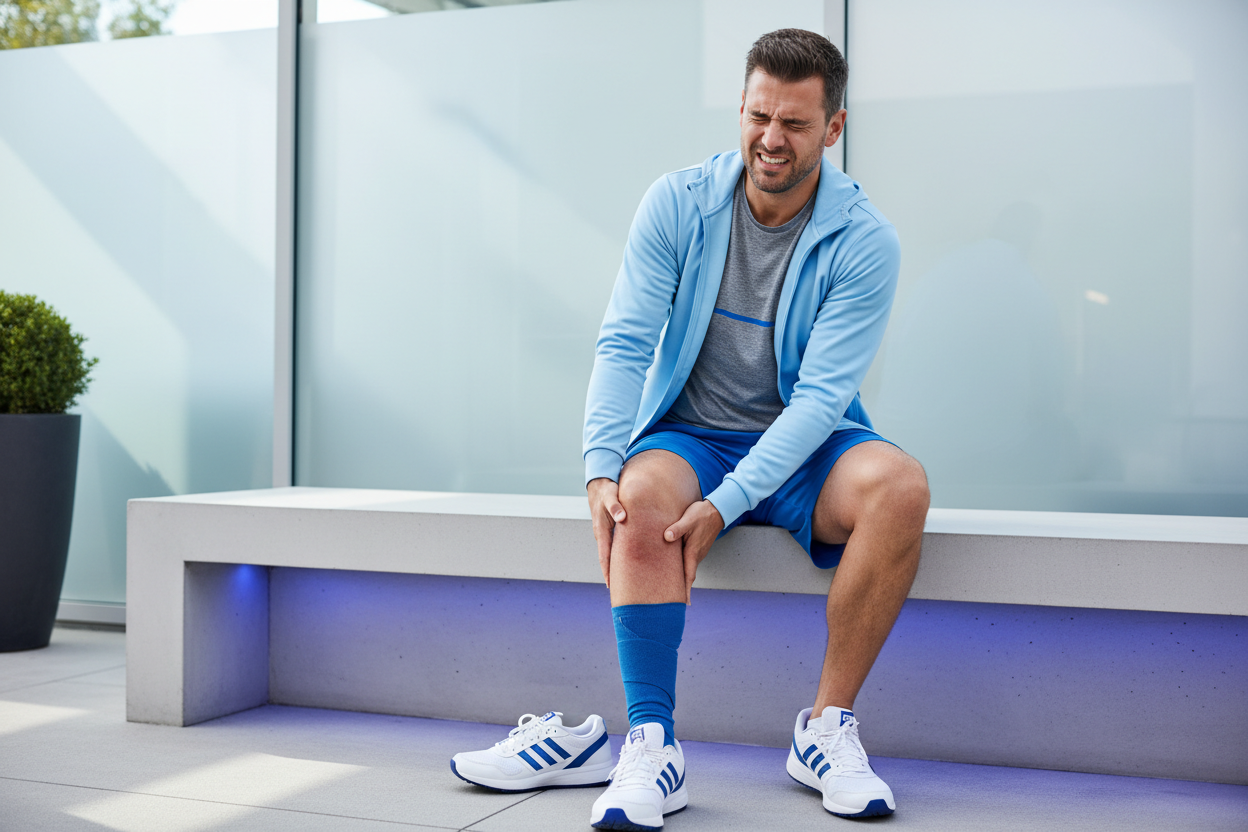
Ankle sprains are among the most common injuries — in sport, in daily life, and simply from an awkward step off a kerb. But not every ankle issue needs the same level of support, and choosing the right brace affects both comfort and how well the joint heals.
Compression Ankle Sleeves
For mild swelling, general aches, or everyday preventive support during sport, a compression sleeve provides gentle, even pressure without limiting range of motion much. These are comfortable enough for all-day wear under socks and shoes, and are often used simply for extra support and warmth during activity, even without a specific injury.
Lace-Up and Strap Ankle Supports
For a moderate sprain or a history of "rolling" the ankle, a lace-up or strap-adjustable brace offers more structured support, letting you fine-tune tightness as swelling changes through the day — genuinely useful since ankle swelling often fluctuates in the days following an injury. Many athletes also use these preventively for sports with lots of lateral movement, like basketball, football, or padel.
Rigid/Semi-Rigid Braces
For a more significant sprain or chronic instability, a rigid or semi-rigid brace with side stabilisers limits the inward and outward rolling motion that causes re-injury, while still allowing forward-and-back movement for walking and running. These are often used in the earlier, more acute stage of a moderate-to-severe sprain, when ligaments need more protection from lateral stress while healing.
Ankle Taping vs. Bracing
Some athletes use athletic tape alongside or instead of a brace. Taping offers a customised fit but loosens over the course of activity and needs reapplication by someone skilled in the technique. A well-fitted brace offers consistent support throughout an activity session without loosening — one reason many people transition to bracing for regular use rather than repeated taping.
Post-Injury vs. Preventive Use
Immediately after a sprain, a firmer brace protects the healing ligaments during the most vulnerable stage. As the ankle strengthens, many transition to a lighter compression sleeve for ongoing preventive support — worth discussing with a physiotherapist as recovery progresses, since moving to a lighter brace too early risks re-injury.
Fit Matters More Than You'd Think
A loose ankle brace slips down inside the shoe during activity, reducing effectiveness exactly when needed most; one too tight restricts circulation or causes discomfort that limits how consistently it's worn. Check sizing against ankle circumference rather than shoe size, and try the brace on with the shoes it'll actually be worn with.
Choosing Based on Activity Type
For running and general fitness, a lower-profile brace that fits comfortably inside a training shoe usually works best. For court sports with frequent direction changes — basketball, padel, squash — a more structured lace-up or semi-rigid brace often provides the lateral stability needed during quick pivots.
Don't Ignore Repeated Sprains
If the ankle keeps rolling or feels unstable even with a brace, get it properly assessed — repeated sprains can point to underlying ligament laxity or muscle weakness that benefits from targeted physiotherapy alongside bracing, rather than bracing alone solving the issue indefinitely.
Frequently Asked Questions
Can I play sport again while wearing an ankle brace after a sprain? This depends on severity and stage of healing — confirm return-to-sport timing with a doctor or physiotherapist rather than relying on the brace as a sign of readiness.
Do I need bracing on both ankles if only one is injured? Generally only the affected ankle needs bracing unless a doctor or physiotherapist has specifically recommended bilateral support.
How long should I wear an ankle brace after a sprain? This varies significantly by severity — best guided by ongoing assessment from a healthcare professional rather than a fixed timeline.
Shop Ankle Braces at OTB UAE
Our b:joynz and Bauerfeind ankle range covers everything from light compression sleeves to rigid stabilising braces, suited to both sport and everyday recovery. Visit our Dubai or Abu Dhabi Performance Centers, or shop online for delivery across the UAE.